
Clean power shapes 35by35 warming impact, Climate Analytics finds
Meeting the 35by35 electrification target with additional electricity generated partly from fossil fuels would cause 0.11–0.14°C more warming by mid-century than meeting it with clean power. That is the estimate in Climate Analytics’ analysis published on 17.11.2026 .
Electrification means replacing fossil-fuelled technologies with electric alternatives, such as switching from combustion-engine cars to electric vehicles or from gas and oil heating to heat pumps. The presidency’s 35by35 initiative at the 31st United Nations climate conference (COP31) aims to raise electricity’s share of global final energy consumption to 35% by 2035. It does not mean a 35% renewable share in electricity generation.
Climate Analytics is an international climate science and policy institute. Its estimate compares two scenarios for meeting the target, rather than revising a forecast of global temperatures upwards.
According to the presidency’s official explanation , the pledge is voluntary and non-binding and does not set individual national targets.
The 35% objective appears in the Presidency-led draft dated 22.11.2026 . Its inclusion in a draft does not establish that the objective was adopted.
UN Climate Change Executive Secretary Simon Stiell said in his closing remarks on 22.11.2026 that agreement was not reached on the Presidency-led decisions, but other key decisions were made, including on a Just Transition.
In the current briefing , Climate Analytics examines electrification in line with the International Energy Agency’s (IEA) Net Zero Emissions by 2050 (NZE) pathway without accelerated renewables deployment. The 0.11–0.14°C range describes the estimated additional warming relative to clean additional power; the briefing does not present it as a statistical confidence interval.
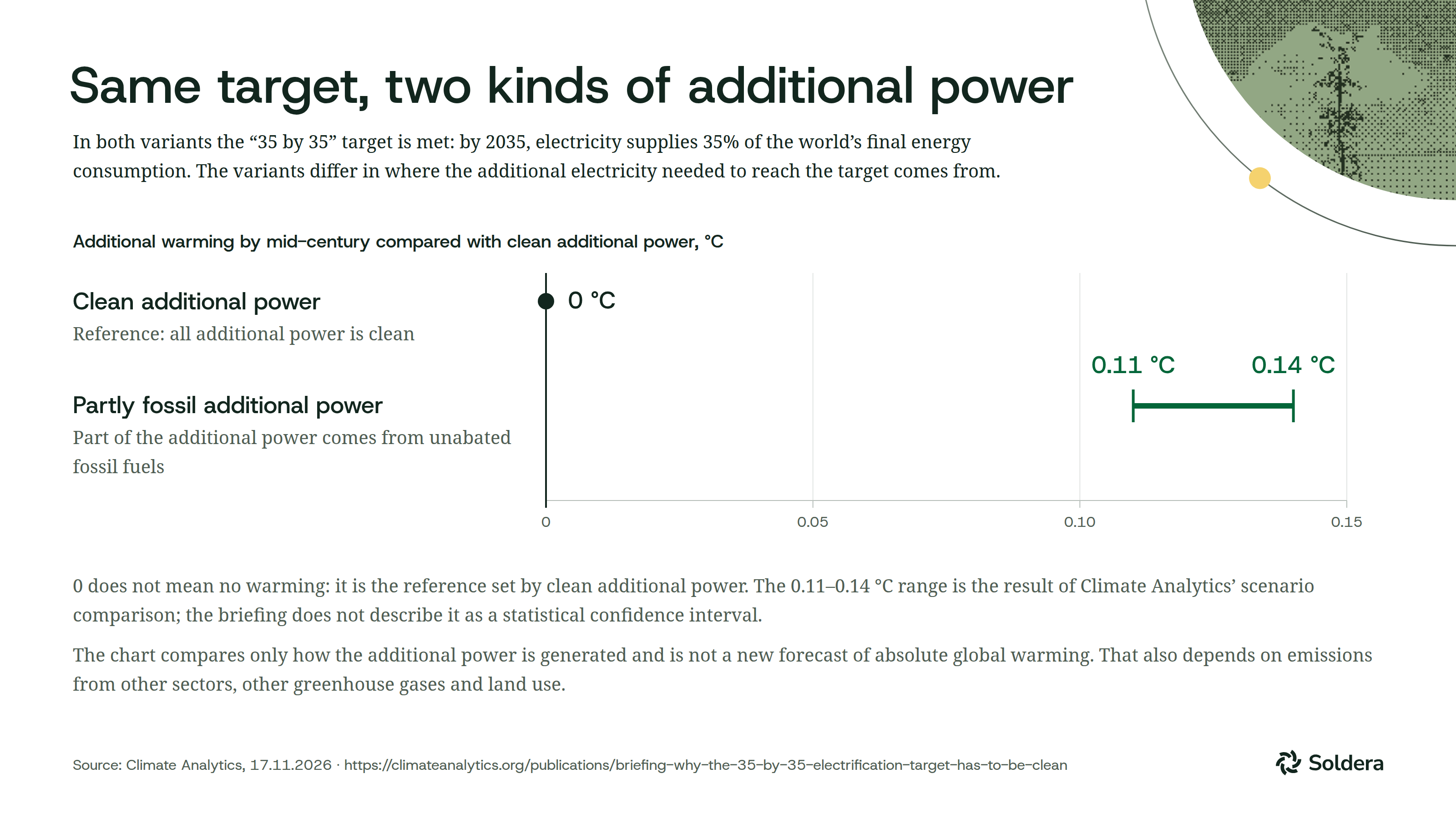
The analysis estimates that reaching the target would increase global electricity demand by around 50% by 2035. The climate impact depends on how that additional electricity is generated.
If electrification accelerates without a corresponding acceleration in renewable energy deployment, gas-fired generation could increase and coal use could decline too slowly. The authors therefore call for renewable energy, grids, storage and power-system flexibility to be developed together.
This does not mean electrification should wait until the power system is entirely clean. Electric technologies generally use energy more efficiently than fossil-fuelled alternatives.
Climate Analytics finds that electrifying buildings, transport and industry can already reduce emissions with today’s generation mix. Clean additional generation allows electrification to deliver greater climate benefits.
How does this relate to earlier scenarios?
Electrification and clean power growth also featured together in the IEA’s 2023 Net Zero Roadmap scenario . It describes a possible pathway to net-zero energy-sector carbon dioxide emissions by 2050, not a forecast based on the continuation of existing policies.
The scenario combines the uptake of electric vehicles and heat pumps with rapid renewable power growth, expanded grids, storage and demand flexibility.
Climate Analytics’ finding is consistent with that earlier approach: electrification and cleaner power generation need to advance together. Its specific addition is an estimate of the warming difference between two generation scenarios for meeting the 35by35 target.
This does not mean the earlier IEA scenario yielded the same 0.11–0.14°C result.
This difference concerns how additional electricity is generated, not all drivers of global warming. Absolute mid-century warming also depends on emissions from other sectors, including transport, industry and agriculture, on other greenhouse gases such as methane, and on land use.

Schedule a 30-minute demo to find out if Soldera is right for you.